In September 2026, colourful posters featuring unusual smiley faces started appearing in cities around the world, and as a Harry Styles fan, I was immediately invested.
I’d already been to his Together, Together tour, but suddenly my social media feeds were filled with photographs of mysterious posters, fans sharing where they’d spotted them and everyone trying to work out what they meant.
It almost reminded me of Pokémon Go, except instead of searching for Pokémon, people were hunting for Harry Styles posters.
Something about it felt very 2016, which was fitting considering everyone had been saying that ‘2026 was going to be the new 2016’. Maybe it was the colours, the clues or simply the excitement of figuring something out together, but I completely fell into it.
The posters featured little more than illustrated faces and the date 10.09.26, which eventually led to the announcement of 25 additional tour dates for 2027.
What I found interesting was that if I wasn’t a Harry Styles fan, I probably wouldn’t have noticed them. But because I recognised the references, I felt like I knew something other people didn’t. I’d made the connection and suddenly felt part of something bigger.
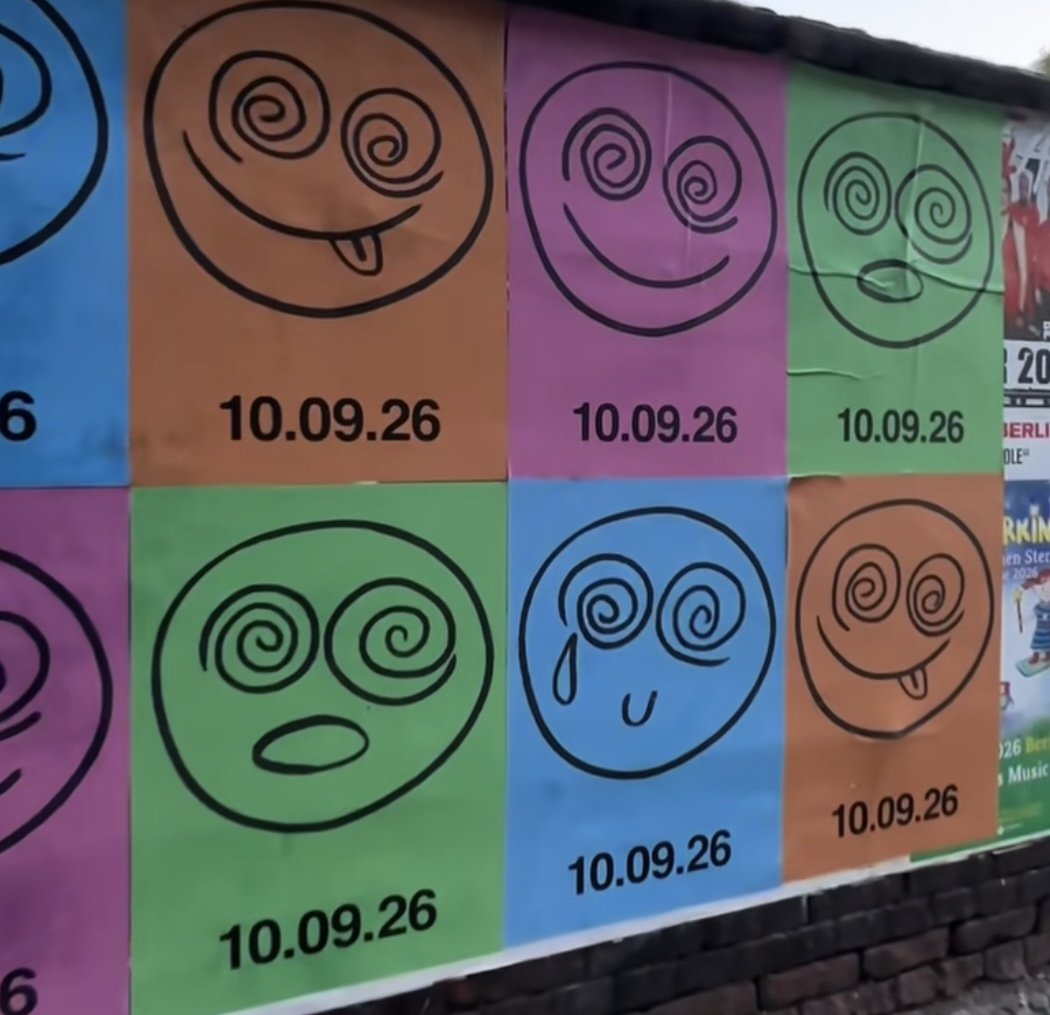 Harry Styles posters spotted throughout Europe.
Why do we love finding hidden clues?
Of course, we can’t discuss Easter eggs in marketing without mentioning Taylor Swift. And considering Harry and Taylor have a bit of history, perhaps his marketing team took some inspiration from hers. I’ll leave that particular theory to the TikTok fan accounts…
Taylor has spent years hiding clues in music videos, outfits and social media posts. Her fans know that seemingly ordinary details could mean something, encouraging them to investigate and share theories.
There’s some psychology behind this. The information-gap theory suggests that curiosity arises when we recognise a gap between what we know and what we want to know. Giving someone a little information can make them more motivated to discover the rest.
For established brands, this can be particularly effective. Rather than simply announcing something, they’re giving their audience an opportunity to get involved.
Is mystery marketing anything new?
Not at all. One of my favourite examples comes from Colman’s Mustard in 1926.
Rather than advertising mustard directly, the brand displayed mysterious messages on London buses asking, ‘Has Your Father Joined The Mustard Club?’
Naturally, people wanted to know what this club was.
The campaign eventually developed into an entire fictional club, complete with characters, recipes and promotional materials. It was so successful that mustard sales reportedly increased by 50% within three months.
What I love about this example is that exactly 100 years ago, a mustard company was using a similar principle to one of the world’s biggest musicians.
The technology has changed, but our curiosity hasn’t.
Can mystery marketing work for smaller businesses?
Harry Styles and Taylor Swift already have enormous audiences invested in what they’re doing. But what happens when nobody knows your brand?
Bumble is a great example.
During its early days, the dating app placed signs around university campuses featuring crossed-out social media platforms alongside the message:
No Facebook. No Instagram. No Snapchat. No Bumble.
Students recognised the first three platforms, but many had no idea what Bumble was. By placing an unfamiliar name alongside established brands, Bumble encouraged people to investigate for themselves.
And this is where I think smaller businesses can learn something.
Imagine a local bakery preparing to launch a new product. Instead of revealing it straight away, it could share a series of close-up photographs, ingredient clues and mysterious captions on social media, encouraging customers to guess what’s coming.
People might start sharing their guesses, tagging friends or even popping into the bakery to ask for more clues. It’s a simple, inexpensive way to build anticipation and get people talking before the product has even launched.
This approach could work particularly well as part of a wider social media strategy for small businesses, helping to build interest without requiring a huge advertising budget.
After all, a local business doesn’t need millions of people discussing its campaign. It needs the right people to become interested.
What makes a marketing mystery successful?
I think it’s important to remember that mystery alone doesn’t make a good campaign. If an unknown business placed a random symbol on a billboard without any context, would anyone care? Probably not.
There needs to be a reason for people to investigate, whether that’s recognising an existing reference, seeing something unexpected or wanting to understand a message.
Success also depends on what you’re trying to achieve. For Harry Styles, it might mean excitement and ticket sales. For Bumble, it was about building awareness and attracting users. For a smaller business, it could simply mean more enquiries or people attending a launch.
The trick is knowing your audience, understanding what will make them curious and giving them something worth discovering.
Planning a launch of your own?
Whether you’re launching a new product, introducing a business or looking for a creative way to get people talking, the right marketing strategy can make all the difference.
At Roar, we help businesses develop creative campaigns, build brand awareness and reach the audiences that matter.
If you’ve got an idea and want help bringing it to life, get in touch with our team. We’d love to hear what you’re planning.